
Pike County Probate Record Types
The Pike County Probate Court is the local forum for estate administration and related probate proceedings. A file may contain a will, petition to open an estate, letters authorizing a personal representative, inventories, accountings, bonds, notices, and orders. Guardianship and conservatorship proceedings may also create Pike County probate records. A guardian is generally concerned with personal care, while a conservator manages protected assets. The official local material does not publish filing thresholds, standard estate timelines, or a full probate fee schedule, so those points should be confirmed with the Probate Office before a filing.
The Probate Office has duties beyond its courtroom role. Its site provides sections for recording, tags and licenses, elections, passports, notary work, and marriage certificate recording. That split matters during a search. An estate petition belongs with Probate Court, while an older deed or other recorded instrument may be found through the recording side. A marriage certificate can also be a recorded document, although statewide certified copies from August 1936 forward are available through Alabama vital records. Divorce case files remain with the Circuit Clerk, not the Probate Office.
The official former probate judges list gives Pike County probate records useful historical context.
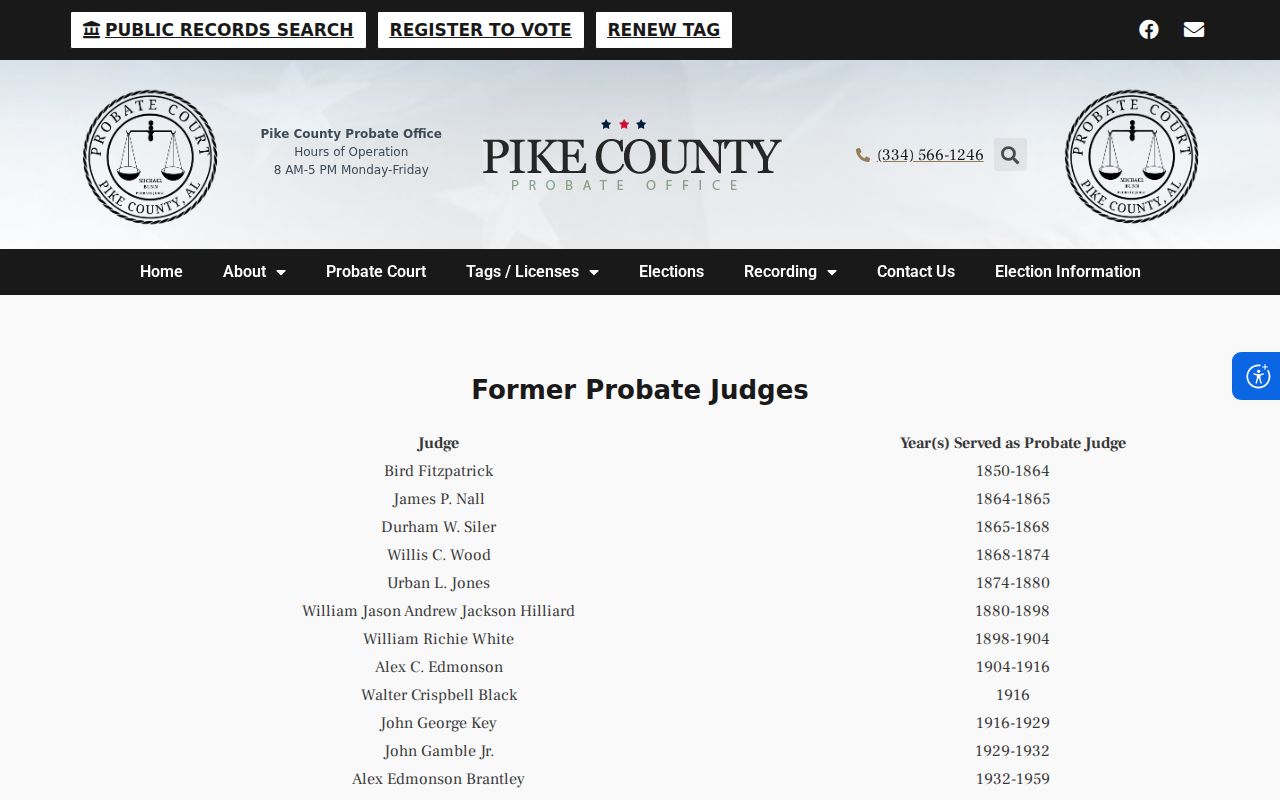
The list runs from Bird Fitzpatrick, who began serving in 1850, through Wes Allen, who served from 2009 through 2018, before the present administration.
The succession also includes James P. Nall, Durham W. Siler, Willis C. Wood, Urban L. Jones, William Jason Andrew Jackson Hilliard, William Richie White, Alex C. Edmonson, Walter Crispbell Black, John George Key, John Gamble Jr., Alex Edmonson Brantley, J. Russell Gibson, Ben Reeves, S.A. Graham, Ronnie Powell, John W. Gibson, and William C. Stone. These names and service periods can help a researcher place an older order or recorded act in its local administrative era. They do not replace a case number, book and page, or instrument reference, but they provide a reliable county chronology drawn from the Probate Office itself.
Pike County Probate Terms
Probate files use short legal terms that identify a person's role or the kind of proceeding. Knowing these terms makes an index entry or court order easier to read. The terms do not establish that a person has authority in a specific Pike County estate. Filed letters and orders show who the court appointed and what powers were granted.
A name in a will is only one part of the record. The Probate Court's later orders, letters, and docketed acts show whether the document was accepted and whether a representative received authority to act.
- Testator
- The person who made and signed a will.
- Executor
- The person named in a will to carry out its directions, subject to court authority.
- Intestate
- The status of dying without a valid will controlling the estate.
- Guardianship
- A proceeding concerning authority to care for another person's personal needs.
- Conservatorship
- A proceeding concerning authority to manage another person's property or finances.
Search Pike County Probate Records
The Pike County Probate Office homepage links to an official public records search hosted by a records-system vendor. The search interface did not expose a complete field inventory during research, so it should not be described as if it guarantees searches by decedent, case number, instrument, or date. Treat the portal as a first check. If it does not show the needed Pike County probate record, use the office phone or visit in person. Staff can explain where a local file is maintained, but office staff cannot supply legal advice about opening an estate or choosing a filing.
- Identify whether the request concerns an estate, will, guardianship, conservatorship, recorded instrument, or marriage certificate. Record type determines the right counter and search path.
- Open the Pike Probate public records search from the official office site and try the fields the portal makes available.
- Write down any name, date, book and page, instrument number, or case reference returned. These details help staff locate the right record.
- If the search fails or an image is not available, call or visit the Probate Office. Ask about inspection, plain copies, certified copies, current fees, and processing time.
The official Probate Court page confirms the local court channel and contact point.
This source is the sound fallback when the public-records portal lacks a file or does not reveal enough detail to finish a request.
Pike County Probate Court Office
Pike County has one county Probate Office identified in the official research. Probate Judge Michael Bunn has served since 2019. The office is separate from the Pike County Judicial Complex, where the Circuit Clerk maintains Circuit and District Court records. A person planning to visit both offices should note that the Probate Office is on West Church Street, while the Circuit Clerk is on North Three Notch Street.
Call before visiting when a request involves an older file, a certified copy, or a potentially restricted matter. Office staff can confirm the current access channel, fee, identification rule, and pickup or mailing option.
Pike County Probate Court
Probate Judge: Michael Bunn
120 W. Church St.
Troy, AL 36081
(334) 566-1246
Monday through Friday, 8:00 a.m. to 5:00 p.m.
Pike County Probate Record Fees
The local pages reviewed did not publish a complete probate filing or copy-fee chart. The Pike Probate recording page points to separate recording-fee information and carries a notice about changing notary laws, but the extracted official material does not establish estate filing, letters, guardianship, or certified-copy amounts. Call the office before sending payment. The only researched amounts tied to a probate-related record channel are the statewide fees for certified Alabama marriage certificates.
| Item | Amount |
|---|---|
| Estate or probate filing | Call the Probate Office for the current amount |
| Plain or certified probate copy | Call for the current copy and certification charge |
| Recording fee | Use the recording-page fee link or call the office |
| ADPH marriage certificate search with one certified copy | $15.00 |
| Additional same-record ADPH copy ordered together | $6.00 |
The official recording source shows where Pike County probate record users should verify recording charges.
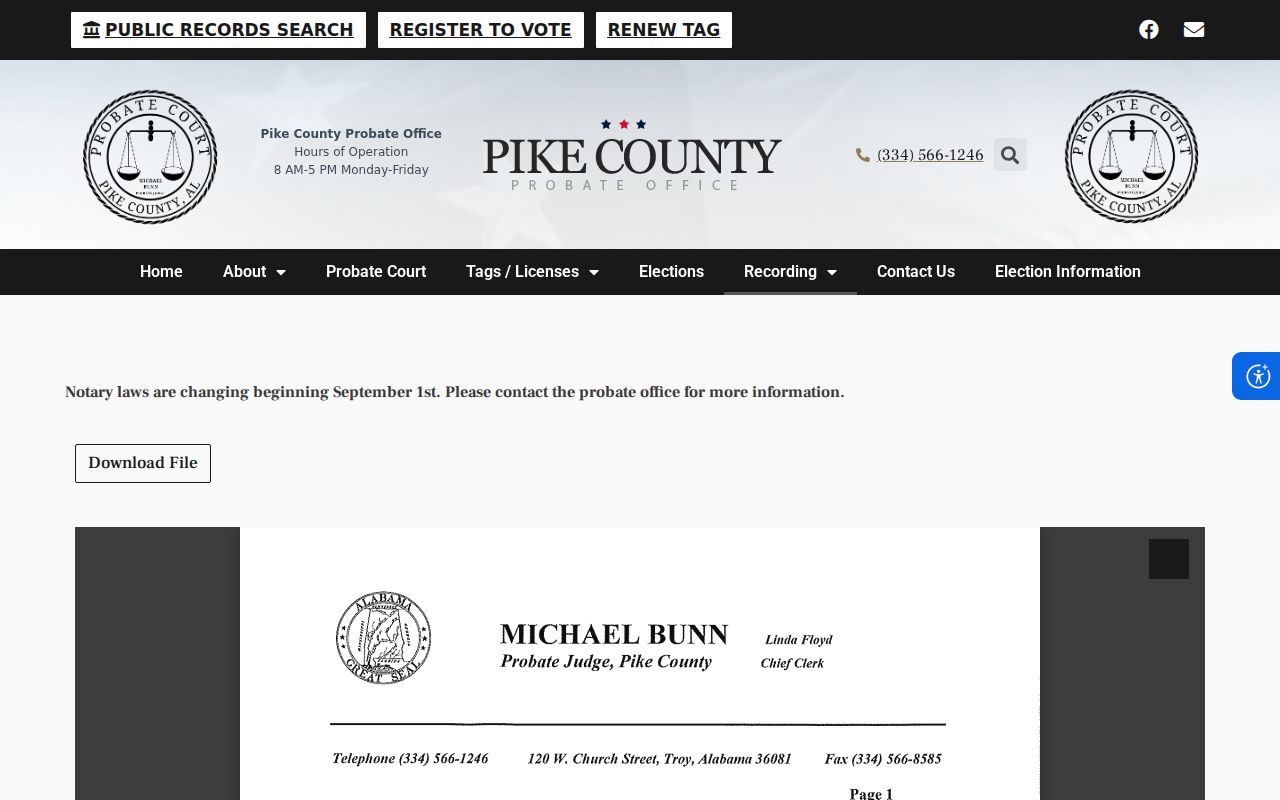
Recording fees should not be assumed to match Probate Court case-filing fees, even though the same office administers both functions.
What Pike County Probate Records Show
A Pike County probate file may identify the decedent or protected person, the petitioner, the personal representative, filing dates, bonds, inventories, accountings, notices, and court orders. A will may name beneficiaries and an executor, but the later court record shows whether the document was offered for probate and who received authority. An inventory describes reported estate property. An accounting records money handled during administration. The amount of detail available online may differ from the paper file, and a portal index should not be read as a complete estate history.
Recorded instruments form a related but distinct collection. The Probate Office public-records link may be useful for land and recording research, while marriage certificate recording has both county and state channels. Records before August 1936 should be requested from the probate office in the county where the license was issued. For later certified marriage certificates, the Alabama Department of Public Health is another route. Corrections to a certificate recorded in Pike County return to the local Probate Court process.
The Pike County Commission overview places the Probate Office within county government.
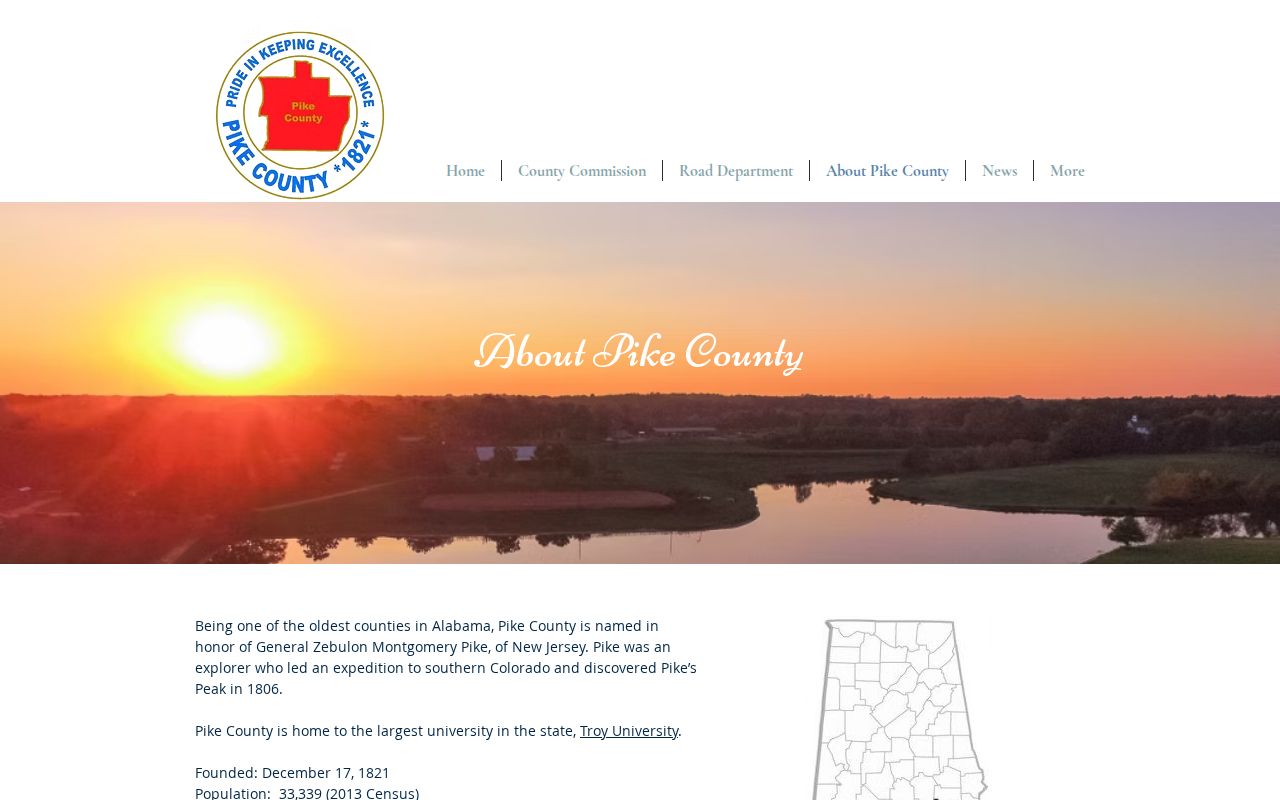
The Commission and Probate Office have different addresses and duties, so a general county inquiry may need redirection to the probate record keeper.
Restricted Pike County Probate Records
Not every paper filed with a probate court is open without limits. Alabama adoption proceedings and records are confidential except where law or a court order authorizes access. Mental-health commitment material should also be treated as restricted unless the Probate Office or a court order confirms access. Guardianship or conservatorship files may contain facts about minors, health, capacity, or finances that are not presented like ordinary public recorded instruments. Sealed documents remain outside routine public access.
A requester should give staff enough information to identify the proceeding and explain the requested document. If access depends on being a party, lawyer, fiduciary, or person authorized by an order, be ready to show proof. Public access to one docket entry does not mean every attachment can be copied. The Probate Office can state its access and identification requirements, while legal questions about a right to inspect may require counsel or a court request.
The official Pike County directory provides a county-level route for confirming the correct office.
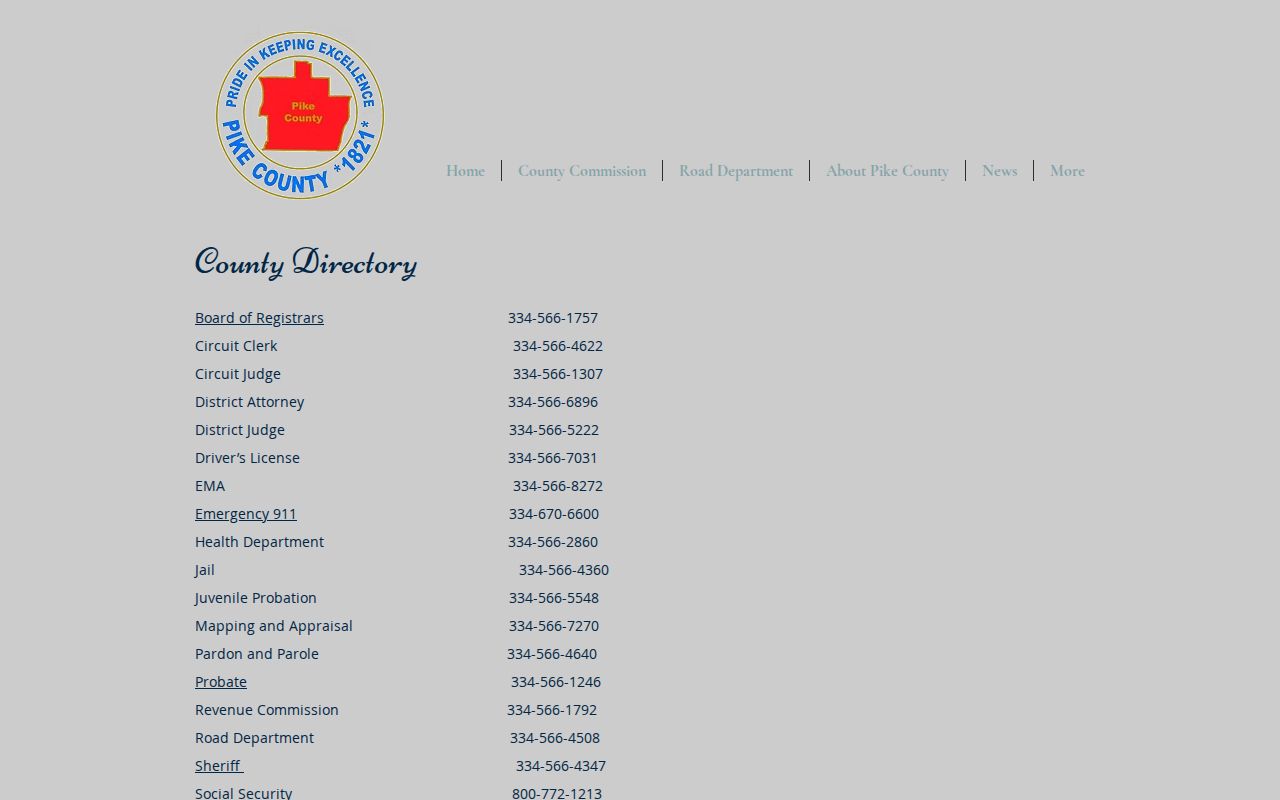
For probate files, the listed Probate Office remains the direct source rather than the Circuit Clerk, sheriff, or municipal court.